Getting up to speed…

Let us get introduced, first, to a class of materials which are highly directional in nature. What does directional mean? Let me give an example. Imagine that you have a sheet of thermocol in your hand. Try to pull the sheet apart—if it’s thin enough, you probably can. Does it matter in what direction you hold the sheet of thermocol? Top-bottom versus left-right? Of course it doesn’t. This is an example of a material that is not directional—it responds in identical fashion, whichever direction you choose to interact with it in.
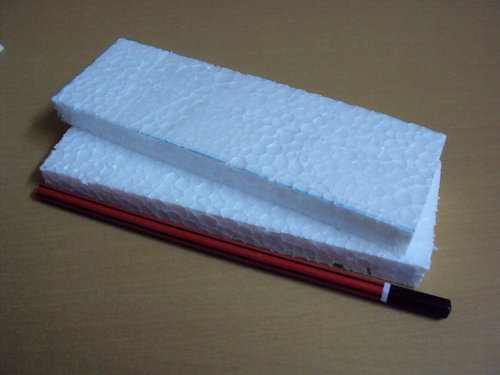
Thermocol Sheet

Thermocol Sheets. (Source)

Now consider a log of wood. Have you seen pieces of wood closely? Have you noticed the striations that seem to run along the length of long pieces or logs of wood? Those are natural fibers present in the wood, and they provide the wood extremely high strength on the direction of the fibers. It’s pretty hard to cut wood across those fibers, and wherever possible, wood is cut along those striations.
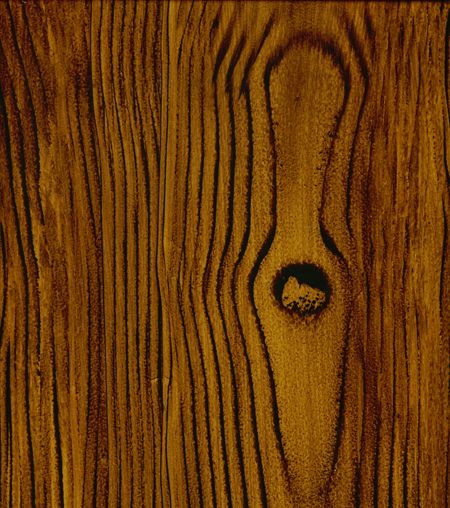
Wood Grain

Wood Grain. (Source)

Wood, then, is an example of a material that’s directional—its response to external effects (such as a saw cutting through it) differs along different directions. That brings us to our first set of technical terms: isotropy and anisotropy. The thermocol sheet (or Aluminum, or Steel, or most other metals) is not directional—it’s isotropic. Wood is directional—and is anisotropic.

Why is this important? Because composite materials gain significance in large part because they’re anisotropic! Which means, they’re strong in one direction; not-so-strong in another. Plus, they can be engineered to be strong in any direction you want!


The Boeing 787

Boeing is in the process of launching (finally, after delays) its latest aircraft, the Boeing 787 Dreamliner. This is the first new major jet launched since the Airbus A380, and of course, has me interested in many ways.

Of course, on a personal-professional level (if that term makes any sense, which I have a feeling it doesn’t—anyway, I work with composite materials, remember?) the B787 is mostly made out of composites. Mostly out of carbon-fiber laminates; some out of carbon fiber sandwiches—use of metal (titanium and aluminum) is minimal.

Second, I just love the wing design. The sweep and curve upward of the wings is just beautiful. Also, it is a vast improvement over the last generation of wing-tips, which looked as if from a design perspective they were a later ‘add-on’ to a previous, flat shape. Here, finally, is a smooth, elegant, downright beautiful wing shape!

I also found this link to the B787’s design highlights. It’s an informative page, do check it out. (For information about the composites being used, go to Visionary Design→Composites.)

From the link above, I learn (among other things):

  • There is a very futuristic HUD (Head-Up Display) in front of the pilots which combines what the pilot actually sees with other useful information that the pilot needs. I’ve seen things like these in Fighter Aircraft simulations, but is this the first time it’s being used commercially?
  • The B787 is not a very large aircraft! I had inherently assumed that the plane would be B747 or A380 scale (i.e. a pretty big plane), but it’s not—it can carry a maximum of about 300 passengers, compared to the B747’s ~400 and the A380’s 525 in three classes.
  • The internal air pressure of the aircraft will correspond to a lower altitude (6000ft, as compared to 8000ft in earlier aircraft), and will have higher moisture content—meaning a more comfortable flight!

Now, what remains is for the major airlines to buy these and put them into service.